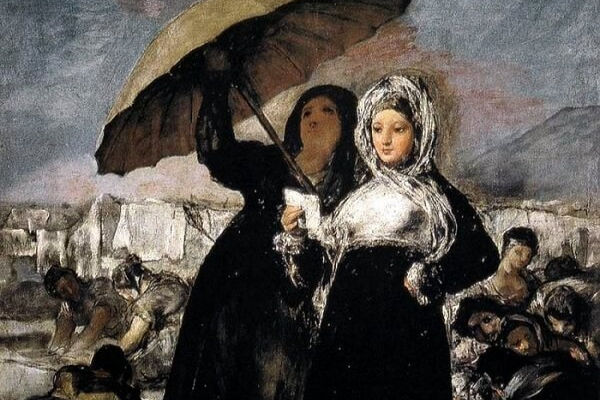
Wonder Women The Rise of Spanish Tonadilleras
Teatru Manoel, Valletta
9 January 2026
6:30 pm
€10-€40
A tribute to the pioneering women of modern theater in 18th-century Spain — entrepreneurs, producers, and fearless singers who conquered the stage and asserted their worth with strength and determination.
Performer: Forma Antiqva
Performers
Pilar Alva, soprano
Jorge Jiménez, violin
Daniel Pinteño, violin
Ruth Verona, cello
Pablo Zapico, baroque guitar
Daniel Zapico, theorbo
Aarón Zapico, harpsichord and conductor
Programme
WONDER WOMEN
Echoes of Strength: Women and Tonadillas in 18th-Century Spain
Enter María Ladvenant, La Valenciana—a woman of striking beauty, immortalized in the verses of Jovellanos
José Castel (1737-1807)
Sinfonía nº 3 - Allegro
Johann Adolph Hasse (1699-1783)
Sinfonía 3 - Andante - Giga. Allegro
José Castel
La guía nueva, tonadilla a solo (1770)
Allegro: «Silencio, mosqueteritos»
Coplas: «La vanidad presidenta»
Allegretto: «Y mudando de estilo»
Seguidillas: «Vaya por fin de fiesta»
Recitado: «Ingrato amante»
Caballo: «Así llamaba una chusca»
Fandango: «Las mujeres con los hombres»
Como prima: «Y aquí, señores míos»
Followed by María del Rosario Fernández, La Tirana—renowned across the world and captured on canvas by Goya
José Castel
Sinfonía nº 3 - Andante gracioso - Minuetto. Allegretto
El sueño, tonadilla a solo
Allegretto: «Mosqueteritos, prendas queridas»
Coplas: «Soñaba que anoche»
Seguidillas: «No hay cosa más suave»
The Curtain Falls on Marionas, Fandangos, and Caracoles
Gaspar Sanz (1640-1710), Bernardo Álvarez Acero (1766-1821) y Santiago de Murcia (1673-1739)
And last, María Antonia Vallejo Fernández, La Caramba—a spirited wanderer of the world, admired and imitated by all
Pablo Esteve (1730-1794)
Sinfonía de la comedia La espigadera (1778)
Blas de Laserna (1751-1816)
La defensa de las mujeres, tonadilla a solo (1788)
Allegretto: «Armada de razones»
Recitado: «¡Ah, hombre impío!»
Al mismo aire: «Dicen que no somos malas»
Boleras: «No digo que más malos»
Boleras: «Pues somos en todo»
Allegro no mucho: «No sé por qué»
Programme Notes
"Armed with reasons,
today I stand
to challenge men
and their false accusations,
for many say,
full of arrogance,
that women
are the cause of all vices."
La defensa de las mujeres, tonadilla a solo (1788)
In the heart of Enlightenment Madrid, when reason tried to order the world and the lights of modernity barely pierced the shadows, a group of women broke every rule: the tonadilleras.
These actresses of popular theater defied the strictures of their time with voice, wit, and presence. From the interludes of comedies and sainetes, they seized the audience with songs and refrains—vibrant, biting, alive. Today, these pieces return to us, more contemporary, more urgent, more necessary than ever.
Composers like Pablo Esteve, José Castel, Pablo del Moral, Antonio Rosales, or Blas de Laserna wrote for them: for their fierce talent, for the way a glance, a jele, an olé, or a sharp call could set a hall ablaze. Works like La guía nueva, El sueño, La defensa de las mujeres—these were not mere songs: they were manifestos of humour, critique, and freedom, where the female voice ruled with absolute authority.
The tonadilleras asked for no permission. They rose, overflowed, laughed, and spoke out. In an era that pushed women to the sidelines, they took centre stage—defying conventions, mocking power, and exposing social hypocrisies to an audience that, between laughter and sighs, recognized in them a profound truth. What a lesson—and how vital it remains today!
Each tonadilla was an act of resistance. In every note, in every phrase cast from the stage, there beat an irrepressible desire for freedom.
By reviving this repertoire, we do more than reclaim a forgotten musical treasure: we rekindle the spirit of artists who made art a weapon of female power. They were the first queens of the stage, warriors of word and melody, conquering freedom with laughter, talent, and courage.
They were—and they remain—the untamed voice of a revolution that still echoes.
To perform this repertoire honestly, and to carry its electric spirit into our present, is both a privilege and an unforgettable gift.
Aarón Zapico
Biographies
Forma AntiqvaOriginal music
The instrumental and vocal ensemble Forma Antiqva is the joint artistic project of the brothers Aarón, Daniel and Pablo Zapico. Created in Langreo, Asturias, more than two decades ago, it is considered one of the most important and influential groups in classical music in Spain due to its artistic career, commitment to the sector, and constant renewal.
With a variable formation, they approach 17th- and 18th-century repertoire with originality and daring, from Iberian dance music to major choral works, opera, and the rediscovery of composers such as Jommelli, Hasse, Baset, Castel, Lázaro and Blas de Laserna.
They are regularly invited to prestigious Spanish venues, and have represented Spanish heritage at the Rudolfinum in Prague, Expo 2020 Dubai, and the Sharjah International Book Fair. Their performances have reached New York, Tokyo, London, Canberra, Singapore and Shanghai, as well as renowned European and Latin American festivals.
Innovative and boundary-breaking, they have premiered music composed for them at the San Sebastián Jazzaldia, performed live scores for historical films, honoured Martin Scorsese and Meryl Streep for the Princess of Asturias Foundation, and developed their educational project Ardor barroco, among many other initiatives.
After more than a decade with the label Winter&Winter, in 2025 they founded Zapico Records. Their debut release, De sópitu, blends historical instruments with folklore and academic music, earning acclaim for its concept, production, and design. Praised for originality, courage, and quality, Forma Antiqva now explores the feminine universe of 18th-century Spain, Hasse’s opera Il Demetrio, and the sacred programme Divina resonancia.